
Interventional Psychiatry, Psychotherapy, Advocacy… and Motherhood in the Margins
By: Brittany Albright, MD, MPH, DABOM
February 11, 2026
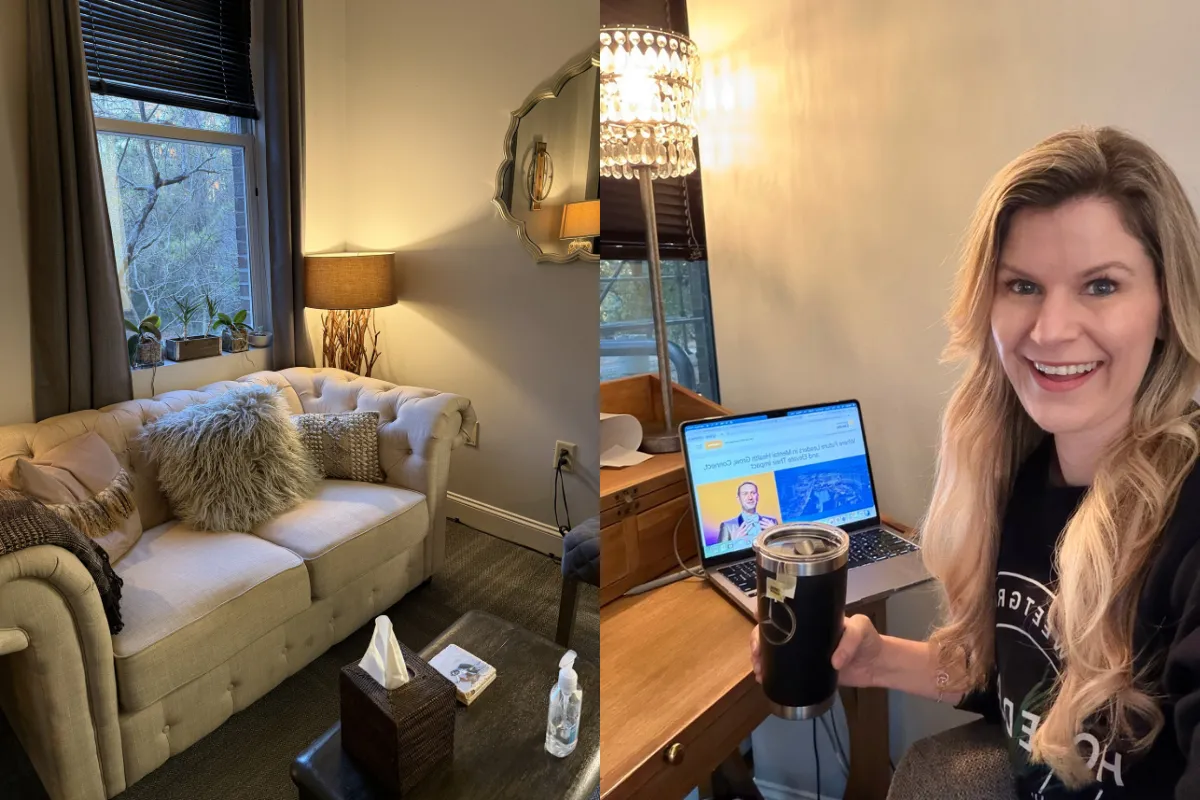
People sometimes assume psychiatry is “quiet work.” A calm office, a couch, and long stretches of peaceful, active listening…
Some days are quiet. But most days? My work looks like a living braid: school drop-offs, psychodynamic therapy sessions, medication management with (always) a sprinkle of psychotherapy, interventional treatments like TMS and esketamine-assisted psychotherapy, learning about new treatments over lunch, SCPA advocacy meetings from the car, cheerleading pickup, email & portal messages galore, picking dog hair out of my dinner consisting of leftovers from 2 nights before, and the sacred nighttime ritual of texting my psychiatry friends: sharing poetry, hard cases, a TON of laughs, and life.
There isn’t a true “typical” day, and I think that’s part of why I love psychiatry, and particularly private practice. Let’s go through one of my Mondays in private practice:
Morning: Family First, Then Patients
My morning starts like many working parents’ mornings: hitting the snooze button and cuddling up to one of my 4 rescue dogs (the hairless Chinese Crested one is the best cuddler), then moving fast (I’m late again!), 20 min getting ready (I have it down to an exact science), quick goodbye to my husband, followed by making a quick tea, grabbing a protein bar, and wrangling all the kids and their stuff into my car.
After dropping my kids off at the school bus stop, I shift into doctor mode, usually seeing my first patient around 7:40 AM.
My mornings often include a blend of:
- Psychodynamic therapy, where we’re paying attention to patterns, defenses, the story beneath the story
- Medication management, but never as a sterile checklist because all med check visits still deserve psychotherapy (even if it’s brief)
- The “in-between” moments that matter: a pause, a tear, a laugh, a new insight, a patient practicing courage in real time
Midday: Team Connection + Interventional Check-Ins
Around lunch, I try to do something that keeps me sane: catch up with my team. Sometimes it’s two minutes in the hallway. Sometimes it’s a real sit-down. Either way, those conversations are oxygen, quick consults, shared wins, “how are you really doing?” moments, and the kind of peer connection that protects against isolation.
Somewhere in the middle of the day, I’ll often:
- Eat a quick lunch standing up and learn about a new patient savings program or treatment offering from one of our reps or medical science liaisons.
- Check in on a TMS patient mid-treatment (even a brief encouragement or progress check can mean a lot)
- Troubleshoot problems, celebrate small improvements, and answer quick questions.
Afternoon: More of What I Love - Patient Care
Afternoons are often where the work feels both heaviest and most hopeful, especially when I’m doing esketamine- or ketamine-assisted psychotherapy.
These are the patients who’ve often tried “everything.” They’re exhausted. They’re brave. And they’re showing up anyway.
Esketamine and ketamine treatments (especially) require presence: careful preparation, monitoring, therapeutic intention, and then integrating what comes up, emotionally, psychologically, and spiritually. It’s not just administering a treatment. It’s holding space for change.
And then, like every clinician everywhere: I’m wrapping up notes into the evening, because if I don’t finish them, they become tomorrow’s weight.
Evening: Advocacy Meetings + Cheer Practice Pickup
Many evenings, I’m in meetings connected to psychiatric advocacy, especially through the South Carolina Psychiatric Association, while simultaneously living the very glamorous life of a parent chauffeur.
So yes, I’ve absolutely been:
- On an advocacy committee call
- With my headphones in
- Pulling into cheerleading pickup
- Trying to sound professional with screaming kids in the background
It’s real-life multitasking, and honestly, it’s a snapshot of how many physician-leaders operate: leadership doesn’t replace family life; it gets layered on top of it.
Night: No-Devices Dinner, Then Emails + A Silly LinkedIn Post
At home, I protect dinner as best I can. One of the simplest boundaries that’s made a huge difference for us is a no-devices rule at the dinner table. It isn’t perfect. But it’s a statement: we belong to each other before we belong to our screens.
After dinner, it’s usually:
- Emails galore while listening to a podcast.
- My favorites are Positive Psychiatry by Rakesh Jain MD; Happy Human 3.0 by Saundra Jain, MA, PsyD, LPC, and Rakesh Jain, MD, MPH; Psych Congress Family & Friends by Rakesh Jain, MD, MPH, and Craig Chepke, MD, DFAPA. I also love catching the NEI podcast led by Andrew Cutler, MD.
- Following up on patient care logistics
- Looking at tomorrow’s schedule
- Processing something new I learned (or something hard I’m still carrying)
Sometimes I turn that processing into a silly LinkedIn post, because humor is a pressure valve and storytelling is how I metabolize meaning.
The Day’s True Ending: Family + My Psychiatry People
After kissing the kids goodnight, almost daily before bed, I text my people: the friends who understand this work without me needing to translate it.
We share:
- poetry
- difficult cases (with respect, de-identification, and the goal of learning)
- encouragement
- faith and perspective
- “you’re not an imposter, you know what you are doing, this is just hard” reminders
- the kind of support that makes you feel less alone in a profession that can quietly isolate you
Somewhere in there, I make room for prayer and exercise, not as a wellness performance, but as survival and grounding. Some days it’s disciplined. Some days it’s messy. But these practices are essential to me.
The Thread That Holds It All Together
My day is a constant shift between roles: physician, therapist, interventional psychiatrist, servant leader, advocate, parent, spouse, friend.
The throughline is simple: show up with presence for my patients, my family, my team, and the people who walk beside me in this work.
And then do it again tomorrow.