
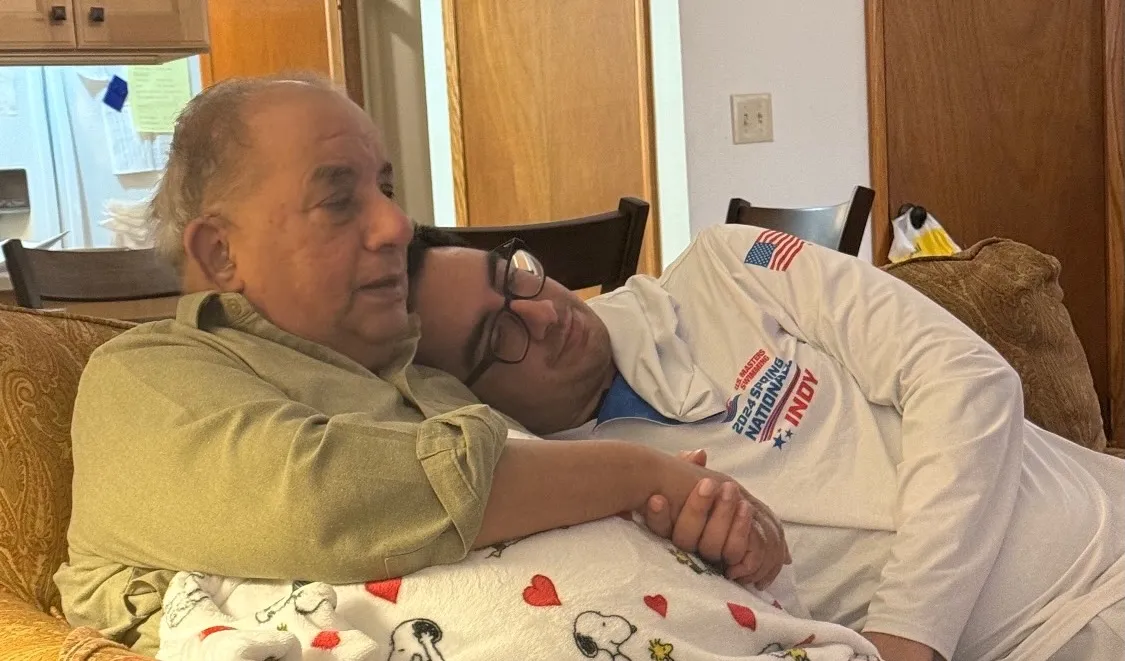
From caring for his grandfather to presenting research, Umayr Shaikh’s path to wound care reflects purpose, perspective, and a commitment to multidisciplinary healing.
By Umayr Shaikh, MPH
Faculty Presenter, SAWC Spring | WHS
I was a child when I first saw how chronic wounds can alter the course of a person's life. My grandfather was living with type 2 diabetes, and I remember helping my aunt, grandmother, and mom care for some of his leg wounds, yet not fully understanding what I was seeing. That experience stayed with me long before I knew I would pursue medicine.
It shaped how I think about care, and it ultimately led me to wound care.
Now, I have the opportunity to continue that journey in med school and in wound care research. This year I also earned a scholarship to attend and present research at the 2026 Symposium on Advanced Wound Care (SAWC) Spring | Wound Healing Society (WHS), taking place April 8-12 in Charlotte, NC.
A Path That Was Not Linear, But Personal
My path into medicine did not follow a traditional route. I studied Organizational Communication and Spanish as an undergraduate student, and then COVID-19 hit.
When I read the news about frontline healthcare workers, I found myself wanting to contribute in a more meaningful way. I wanted to move beyond communicating about health and instead play a direct role in delivering care, integrating my background in communications with meaningful clinical impact.
My local clinic needed interpreters, so I applied and quickly joined the team. There, I saw patients navigating complex health challenges, often without clear access to care or understanding their conditions. Seeing caregivers treat wounds that reminded me of my grandfather was deeply impactful.
Like him, many of these patients required wound care, yet had nowhere else to go but us.
This experience solidified my desire to pursue a future in healthcare. After obtaining a master’s in public health (MPH), I applied and was accepted into med school at Georgetown University.
I am currently spending a dedicated research year with the Department of Dermatologic Oncology at the University of Pennsylvania (PennDOC), focusing on dermatologic oncology and Mohs micrographic surgery, as well as a variety of related areas including wound care. In July, I will return to Georgetown to complete my medical school education.
Why Wound Care Became the Right Fit
When I started medical school, I began conducting research with Georgetown's Multidisciplinary Wound Care Center, where specialists in vascular surgery, plastic surgery, general surgery, and dermatology rounded on each patient together — all part of the same conversation. To me, this reflected how wound care, and patient care in general, is supposed to function: strong teamwork with shared decision-making that places the patient and their wellbeing at the forefront of every thought and action.
In this context, that meant prioritizing both healing and function in the way best suited to each patient.
Bringing Research into Practice at SAWC Spring | WHS
At SAWC Spring | WHS, I will be presenting research made possible by my incredible mentors at the PennDOC, including Drs. Chris Miller, Joe Sobanko, Jeremy Etzkorn, Joanna Walker, and Jun Zhang — along with the principal investigator overseeing the core of this project, Dr. Bill Higgins II, Lab Director of the Pennsylvania Hospital Mohs Micrographic Surgery Unit and Associate Professor of Clinical Dermatology.
Our research focuses on improving healing in challenging surgical wounds using the AmnioExcel® Amniotic Allograft Membrane by Integra. Our work looks at the use of an amniotic allograft membrane in Mohs micrographic surgery, particularly for wounds on the lower leg where healing can be difficult.
In simple terms, this type of graft is designed to support the body’s natural healing process. It provides a biologic scaffold that can help tissue repair in areas with limited blood flow. The goal is to improve outcomes while preserving as much healthy tissue as possible. That matters for both recovery and long-term function.
What I Am Looking Forward to at SAWC Spring
SAWC Spring | WHS brings together clinicians, researchers, and industry leaders from across disciplines. For me, the value of SAWC Spring comes down to a few key things:
- Learning from experts who approach wound care from different specialties
- Understanding how new technologies and treatments are being applied in practice
- Hearing directly from patients and providers about real-world challenges
- Building connections that can shape how I practice medicine in the future
The scholarship support has made it possible for me to be part of this community, and I am incredibly grateful for that opportunity.
Looking Ahead
The wound care field is constantly evolving, but the core mission remains the same: helping patients heal in ways that restore both function and dignity. It is about working in team-based settings to tackle the most pressing challenges facing wound care solutions of our time.
SAWC Spring | WHS is an important part of that journey. It brings together the people and ideas that move the field forward, and I am so thankful to be part of it.
Event Details
- Event: SAWC Spring | WHS
- Dates: April 8-12, 2026
- Location: Charlotte, North Carolina
- Learn More on the Event Website
- Registration Rates and Information
Umayr Shaikh, MPH, is a medical student at Georgetown University School of Medicine and a research fellow focused on advancing multidisciplinary approaches to wound healing.